
Matthew 25:14-30
Do you all remember the financial crisis of 2008? I do.
I was visiting Washington DC with a family member. We were touring
the Capitol building when he found out that Lehman Brothers went
bankrupt and stock prices were tanking. His retirement portfolio was
heavy with stocks – and he was on the phone – yelling at his broker,
“Get me out and get me out now!”
His broker and I were both encouraging him to hang in there –
so he wouldn’t make his losses permanent. He didn’t listen to us.
It took years for his investments to recover fully.
It was not the first time, and certainly not the last time, that people lost
a lot of money on investments.
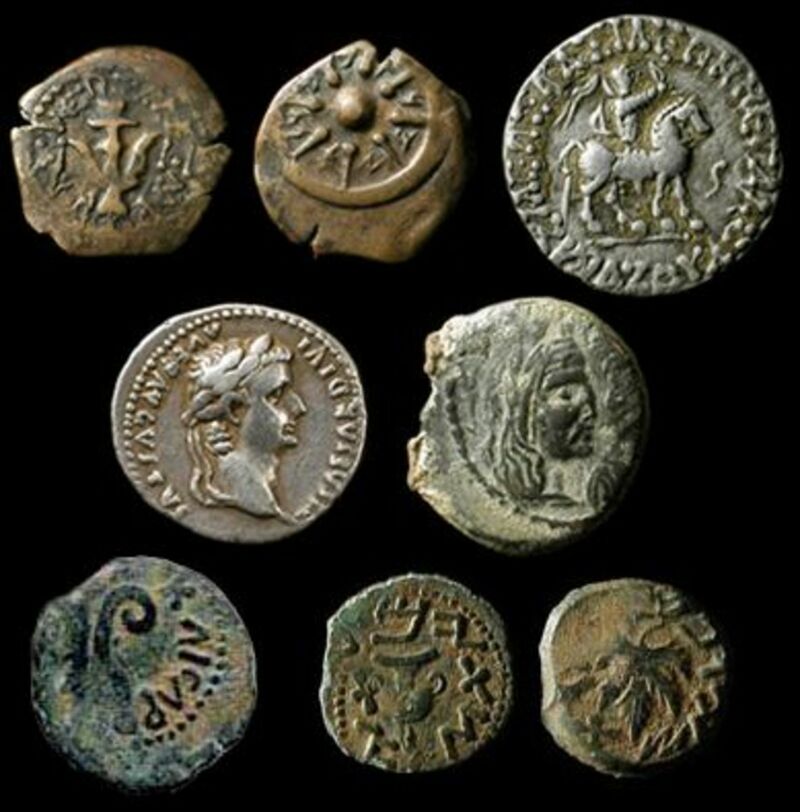
In biblical times, a talent was a significant sum of money – usually
equivalent to about 6,000 denarii – which represented about sixteen
years of a laborer's wages. In today’s money – that would be about a
million dollars.
The federal minimum wage is $7.25 an hour, while Ohio’s minimum
wage is $11.00 an hour for employees who don’t get tips – and half
that for tipped employees. Those go up to $11.40 an hour and $5.70
an hour next year. How could anyone making so little money ever be
able to pay back a multi-million-dollar debt?
Despairing people – like George Baily in “It’s a Wonderful Life” – have
considered suicide over far smaller debts. In George’s case, it was the
$8000 that Uncle Billy accidentally gave to Mr. Potter.
In Jesus’s parable, a rich man was going away on business –
apparently he was involved in some kind of trading. He called his
servants in for a meeting. He gave one five talents, another got two
talents, and the third received 1 talent.
The first two invested the money – doubling their master’s money.
The third was skittish about the market, so he hid the money in a hole
in the ground.
When the master returned, he was very pleased with the two servants
and the gains from their wise investments. The third servant just
returned the money his master had given him: no less, but certainly
no more.
The timid servant could have put the money into the bank, where it
would have earned a little interest, at least. But his boss made nothing
on that money – so he had the money taken from the servant – and
had the servant thrown out of the house – where he had no job and no
money and probably no home.
It’s a sad story. And should also make us a bit uneasy.
God has given us so much – and we will celebrate and give thanks for
those blessings eleven days from now. But those gifts are not only for
our benefit; they are also for the benefit of others and for Jesus’s
kingdom.
In the East Liberty neighborhood of Pittsburgh stands a massive
gothic-style stone church that looks like a Roman Catholic or Episcopal
Cathedral. But it’s not – it’s a Presbyterian Church: East Liberty
Presbyterian – built between 1931 and 1935. It was funded entirely by
Richard Beatty Mellon and his wife, Sarah Jane Negley Mellon.
Hence the church’s nickname: “Mellon’s Fire Escape” – slapped on the
historic building by sarcastic locals who figured that the Mellons had it
built to atone for the sins they committed while amassing their fortune.
While I’m not usually very cynical, I believe there is a good chance
they were thinking that God might look the other way at the Last
Judgement because they built this fabulous church building.
In Jesus’s parable – a “talent” is a unit of money. So His audience
would have immediately attached a monetary meaning to the parable.
But in modern American English – a talent is an ability to do something
well. In some cases, that might be the ability to make lots of money
which can be shared with the poor. Or to have a little, but to share a
significant portion of it with those in need.
Which is where Jesus was going with his parable. In the sixth chapter
of Mark’s account of the Gospel – right after Peter made his profession
of faith in Jesus as the Messiah – Jesus had to rebuke Peter –
because he took exception to Jesus’s talk about being rejected by the
high-ranking religious leaders, which would end with His death and
subsequent resurrection.
Jesus understood God’s plan for Him better than anyone. Jesus knew
that He had come to Earth to suffer and die for the sins of His people.
Jesus did not have money to invest in the Kingdom – but He was
willing to invest His very life in it.
We’re now halfway through the month of November. Thanksgiving is
eleven days away. Black Friday is twelve days from now – traditionally
the biggest shopping day of the year.
People will make a huge investment that day – and throughout the
Christmas shopping season – hoping to bring joy to people they love
through the gifts they purchase. The problem is – Black Friday will
continue to roll around every year. And Christmas will come around
every year. And all the other excuses for overspending will cycle
through like clockwork.
We do that – and I’m as guilty as anyone else – but what investments
are we making in the Kingdom of God? And not just investments of
money. What investments of our time do we make? Or our strong
backs? Or our talents – like leadership, creativity, financial expertise,
compassion, companionship, mentoring, or the most important of all –
faith?
Faith to sustain others when their faith is running on fumes.
Faith to keep praying when everyone else has given up hope.
Faith to tell someone the truth – which may not be what that person
wants, but which is what that person needs.
Faith to keep giving when money is tight.
Faith to believe that God has it all under control – even when it all
seems out of control.
It’s not as though you can give someone the gift of faith, but you can
model that gift for someone. With God’s help – they will catch that faith
from you.
Here’s some homework for your Sunday afternoon:
What gifts or talents do you have that you can share with others?
And how can you share them with others?
Amen.